Built around your craft
Software for small wineries
From harvest to bottle — track vintages and batches, maturation, and tell your provenance story on every label.
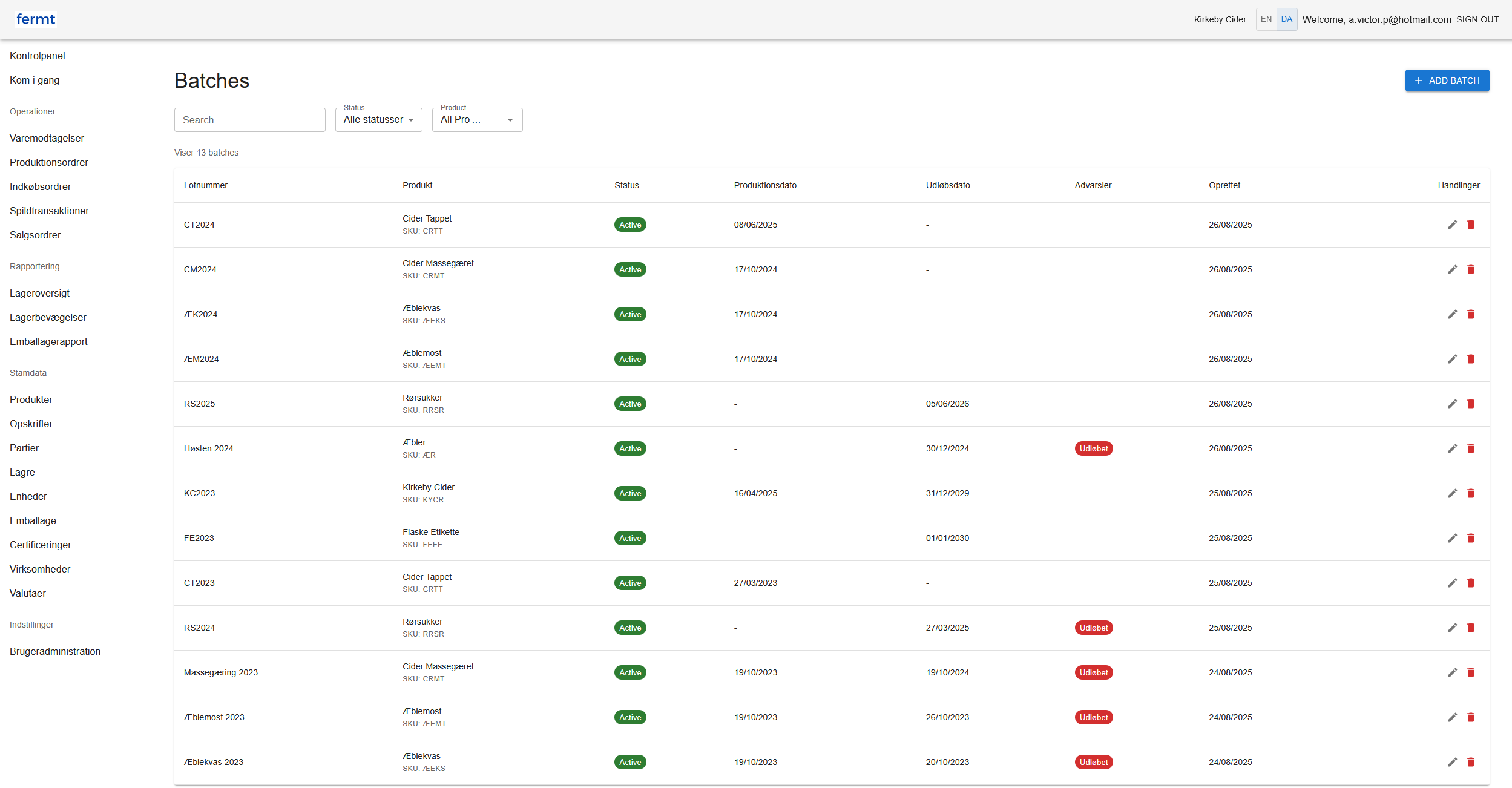
Your workflow in fermt
Your winery, end to end
Maturation & provenance
Track barrel and tank maturation, manage blends across vintages, and surface origin and age on QR labels that build trust.
Compliance, handled
Alcohol & organic, handled
Alcohol reporting and an auditable organic balance, generated from your production data.
The QR label is no longer optional
Since December 2023, wine sold in the EU must carry an ingredient list and a nutrition declaration, and regulation 2021/2117 lets you meet most of that with an electronic label reached by a QR code on the bottle. The catch is that the e-label is not marketing: it has to be specific to what is in the bottle, it must not carry sales or tracking content, and it has to keep working for as long as the wine is on a shelf somewhere.
In fermt a public label belongs to a batch, not to a product. Each one is versioned and published deliberately, with its own QR generated as both PNG and SVG so it can go to a printer at any size. Publishing a corrected version does not break the code already on bottles: the QR keeps resolving, and the page it reaches is the version you published.
- Ingredients and allergens per batch, not per product line
- Nutrition declaration including energy in kJ and kcal
- QR as PNG and SVG, sized for the label you are actually printing
- Versioned and published, so a correction is traceable rather than silent
Vintage, parcel and blend, without losing the thread
A wine's identity is its lot. fermt keeps the batch as the unit of record from press through tank and barrel to bottling, so a finished lot traces back to the parcels that went into it and forward to the pallets that left. Blends are production orders with several inputs, which means the composition of a bottling is recorded rather than remembered.
Where wine goes into barrel, the same container tracking the distilleries use applies: fills, rackings and top-ups are movements against the vessel, and losses show up as a measured figure instead of an end-of-year surprise.
Questions we get
Winery questions we get asked
Does fermt produce a compliant e-label for EU wine?
It produces the per-batch page and the QR that reaches it, carrying the ingredient list, allergens and the nutrition declaration in kJ and kcal. You stay responsible for the accuracy of what goes on it, as you would with a printed back label. What fermt removes is the manual work of maintaining a separate page per lot and keeping the codes straight.
What happens if we need to correct a published label?
Publish a new version. The QR already on the bottles keeps resolving, and the page it reaches is the current published version, so a correction does not mean a relabelling run. Because versions are kept, you can also show what was published when.
Can one label cover a whole product line?
It can, but for wine it usually should not. Ingredients and analysis vary by lot, and the regulation expects the information to match what is in the bottle. fermt therefore ties a label to a batch by default.
Do you handle duty on wine?
Yes, through the same ABV band mechanism the other alcohol producers use. Volumes are bucketed into your market's duty bands using the batch's measured strength, with anything outside every band reported explicitly rather than folded into the nearest one.
We are organic as well. Does that stack?
It does. The organic balance runs on the same movements, and organic certificates attach to the batches they cover, so a lot can show both its e-label and the certificate that was valid on the day it was made.
Run your winery on fermt
Start your free trial today, or talk to us about your setup.