
Built around your craft
Software for meaderies
Track honey lots by beekeeper and floral source, run ferments that last months without losing the thread, and report duty on each batch's measured strength rather than a nominal one.
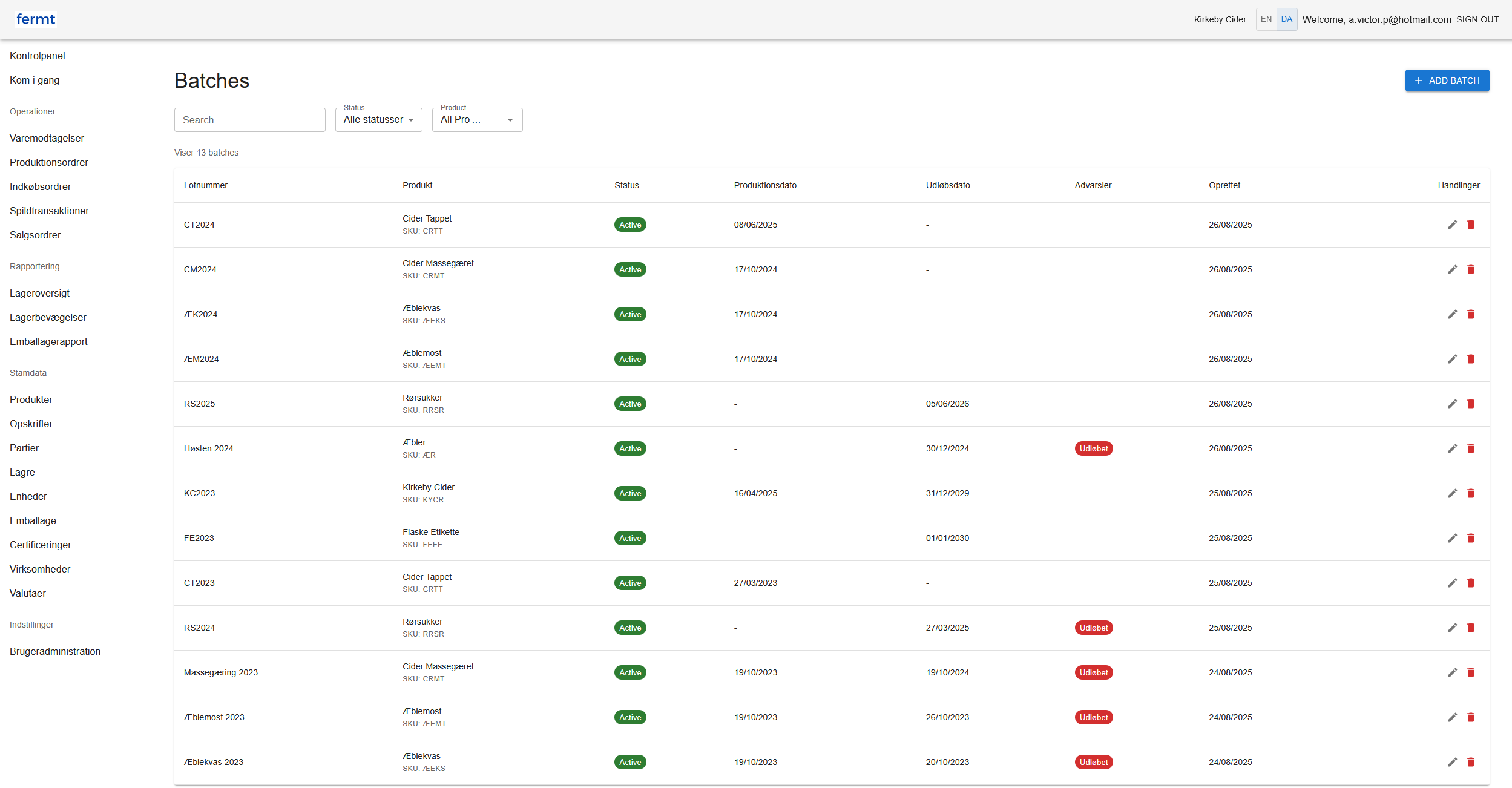
Your workflow in fermt
Your meadery, end to end
Take in the honey
Lots recorded per beekeeper and floral source, ready to trace forward.
Learn moreFerment for months
A vessel holds an open batch, with movements dated when they happened.
Learn moreReport what you made
Duty from the batch's measured strength, and a per-batch label with its QR.
Learn moreA ferment that outlasts the reporting period
Mead does not finish on a schedule. A batch can sit in the vessel for six months and straddle two or three reporting periods, and the honest answer for a period report is that the material is work in progress — not finished stock, and not missing. fermt leaves the batch open in the vessel with its movements on the dates they happened, so every period tells the truth about it.
Compliance, handled
Duty on your strength, not a standard one
Honey, water and time decide where a mead lands, and no two batches land in the same place. Duty uses each batch's measured ABV where there is one, bucketed into your own bands, with anything outside every band reported explicitly.
Few lots, long ferments, one vessel per production
A meadery's shape is the opposite of a brewery's. Honey arrives in a handful of large lots with a long shelf life rather than weekly deliveries; a ferment runs for months rather than days; and a single vessel is often an entire production run rather than one of twenty. That changes which parts of a system matter.
What matters most is that a batch can stay open, in a named vessel, with its movements sitting on the dates they actually happened. A period report then shows the mead as work in progress — which is both true and what an inspector expects — instead of forcing a choice between counting it as finished or losing it. Racking, topping up and blending are movements against the vessel, so the volume in the system tracks the volume in the room.
- Honey lots per beekeeper and floral source, traced forward to the bottle
- Batches that stay open in a vessel across reporting periods
- Racking, top-ups and blends as recorded movements
- Duty from each batch's measured strength
A range that varies by what you add, not by the base
Most meaderies build a range from one or two base meads plus adjuncts — fruit, spice, hops, barrel time. That is a chain, not a set of separate products: the base is a batch, each variant is a production order consuming it, and the finished bottles trace back through the variant to the base and on to the honey.
The labelling follows the same logic. A digital label belongs to the batch rather than the product line, so a fruit variant carries its own ingredients, allergens and nutrition declaration with its own QR — which is the only version of that page that is actually true for the bottle in someone's hand.
Questions we get
Meadery questions we get asked
Our ferments run for months. Does that break period reporting?
No — it is the case this is built for. The batch stays open in the vessel and its movements sit on the dates they happened, so a period report shows the material as work in progress rather than as finished stock or as nothing at all. This is the single biggest difference between a meadery and a brewery in practice.
How is duty handled when every batch finishes differently?
From the batch's own measured ABV wherever there is one, with the product's standard strength only as a fallback. Volumes are bucketed into duty bands you configure, and anything outside every band is reported as an explicit out-of-band line rather than rounded into a neighbour.
Can we trace a bottle back to the beekeeper?
Yes, provided the honey was received against the supplier and lot. From there the chain runs through the base mead, any variant that consumed it, and the bottling, in both directions.
We make many variants from one base mead. Is that a lot of setup?
No. The base is a batch and each variant is a production order consuming it, so the base is recorded once and the variants reference it. The trace and the cost both follow automatically.
Is there a separate page for cider?
Yes, and it is worth reading if you make both — the two share a system and most of the mechanics. This page covers what is specific to mead: the long ferment, the small number of large honey lots, and one vessel being a whole production run.
Run your meadery on fermt
Start your free trial today, or talk to us about your setup.