
Built around your craft
Software for craft maltings
Track barley intake by grower and variety, follow a lot through steeping, germination and kilning, and know what is in every silo and bag without a clipboard.
Your workflow in fermt
Your malthouse, end to end
The loss between barley in and malt out
A malting loses weight to steep water, rootlets and the kiln, and the figure matters commercially as well as for the accounts. Because each stage is an order with recorded inputs and outputs, the malting loss is measured per lot instead of appearing as an unexplained gap between the weighbridge and the bagging line.
Compliance, handled
Traceability the brewers ask for
Your customers are producers with their own traceability obligations, and the question they ask is which field a bag came from. A malt lot resolves back to the grower and harvest, and forward to every brewery it shipped to.
Barley arrives as a harvest, not as a delivery schedule
Intake is seasonal and lumpy: several growers in a few weeks, each with a variety, a harvest year and a moisture reading, and the paperwork done at the weighbridge decides what you can answer months later. Goods receipts record the lot against the grower, and the batch carries that link through every stage that follows.
That matters more for malt than for most crafts, because the customer is a brewer or a distiller with traceability obligations of their own. When they ask which field a bag came from, the answer is a query rather than a search through delivery notes.
- Intake per grower, variety and harvest year
- A batch at each stage: steep, germination, kiln
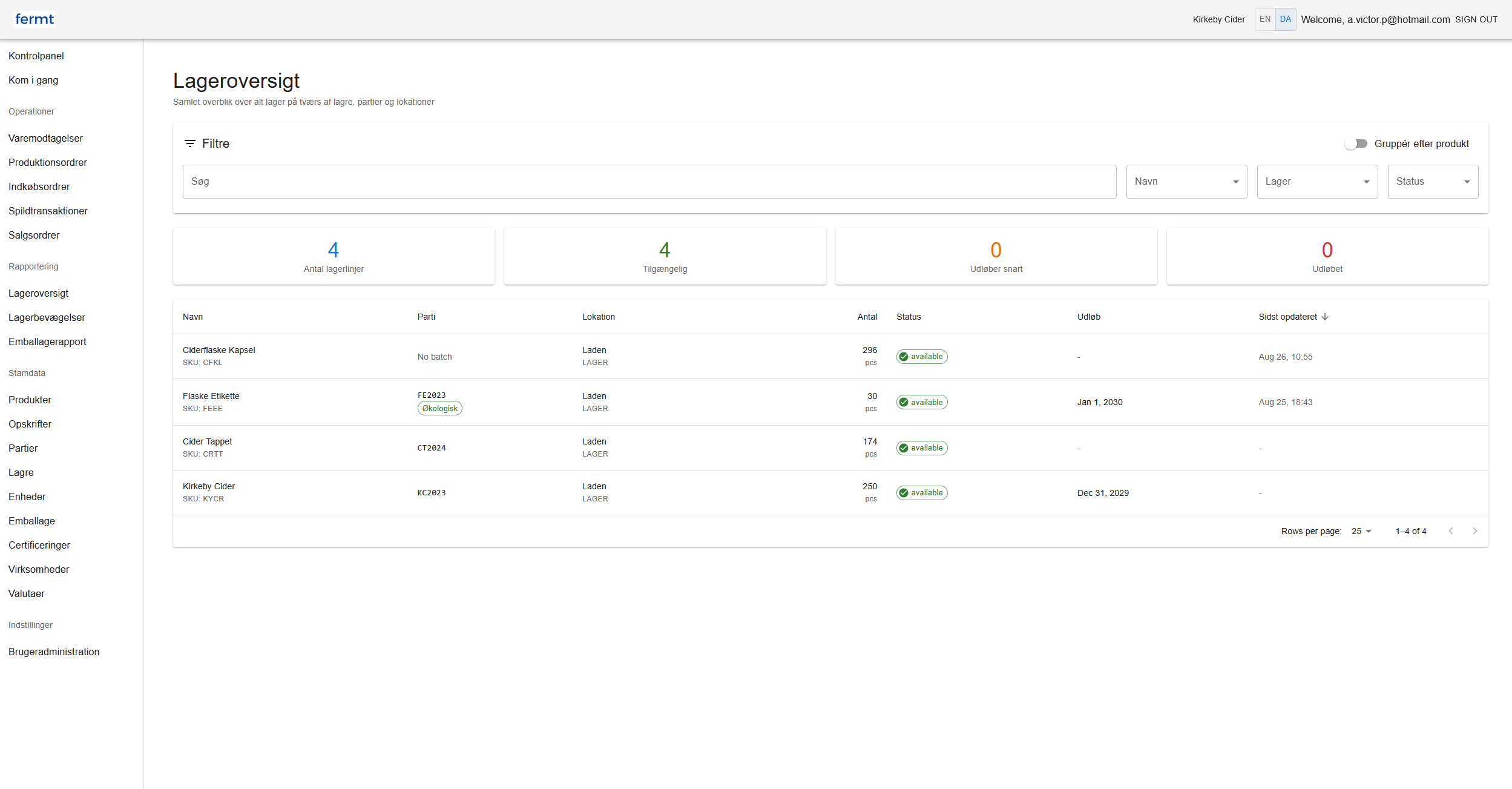
- Stock answerable per silo, bin and bag
- Forward trace from a barley lot to every brewery it reached
Several silos, several units, one figure that has to agree
A malthouse stores raw barley, malt in progress and finished malt in different places, often in the same building, and moves material between them constantly. Every transaction belongs to a location, so "how much is in bin four" has an answer, and transfers between silos are recorded movements rather than a note on a whiteboard.
Units convert consistently, which sounds minor until it is not: buying by the tonne, malting by the batch and selling in 25 kg sacks and bulk tankers at the same time is the normal case, and a system that cannot reconcile those produces exactly the mismatch that turns into a reporting error later.
Questions we get
Malting questions we get asked
Can we record malting loss per lot?
Yes. Each stage is an order with its inputs and outputs on the same document, so the difference between barley in and malt out is recorded rather than inferred. Rootlets and screenings can be outputs in their own right if you sell them, or waste records if not.
Do you handle several silos and bins?
Yes, as warehouses and locations, with transfers between them recorded as movements. Stock is answerable per location rather than only as a company total, which is the only way a physical count can be reconciled.
We sell in sacks and in bulk. Do the units reconcile?
Yes. Units of measure carry conversion factors applied consistently across purchase, production and sale, so a tonne bought, a batch malted and a 25 kg sack sold all reconcile to each other.
Can a brewery trace a bag back to the grower?
Provided the intake was recorded against the grower and lot, yes — and that is usually why they are asking. The malt batch resolves back to the barley lot and its supplier, and forward to every delivery it went out on.
Are you organic-aware?
Yes. Organic status sits on the product and certificates attach to the batches they covered, so organic and conventional malt can run in the same malthouse with the balance separating them.
Run your malthouse on fermt
Start your free trial today, or talk to us about your setup.