
Built around your craft
Software for craft bakeries
From flour to finished loaf — scale recipes, control allergens, and manage stock and shelf-life without the paperwork.
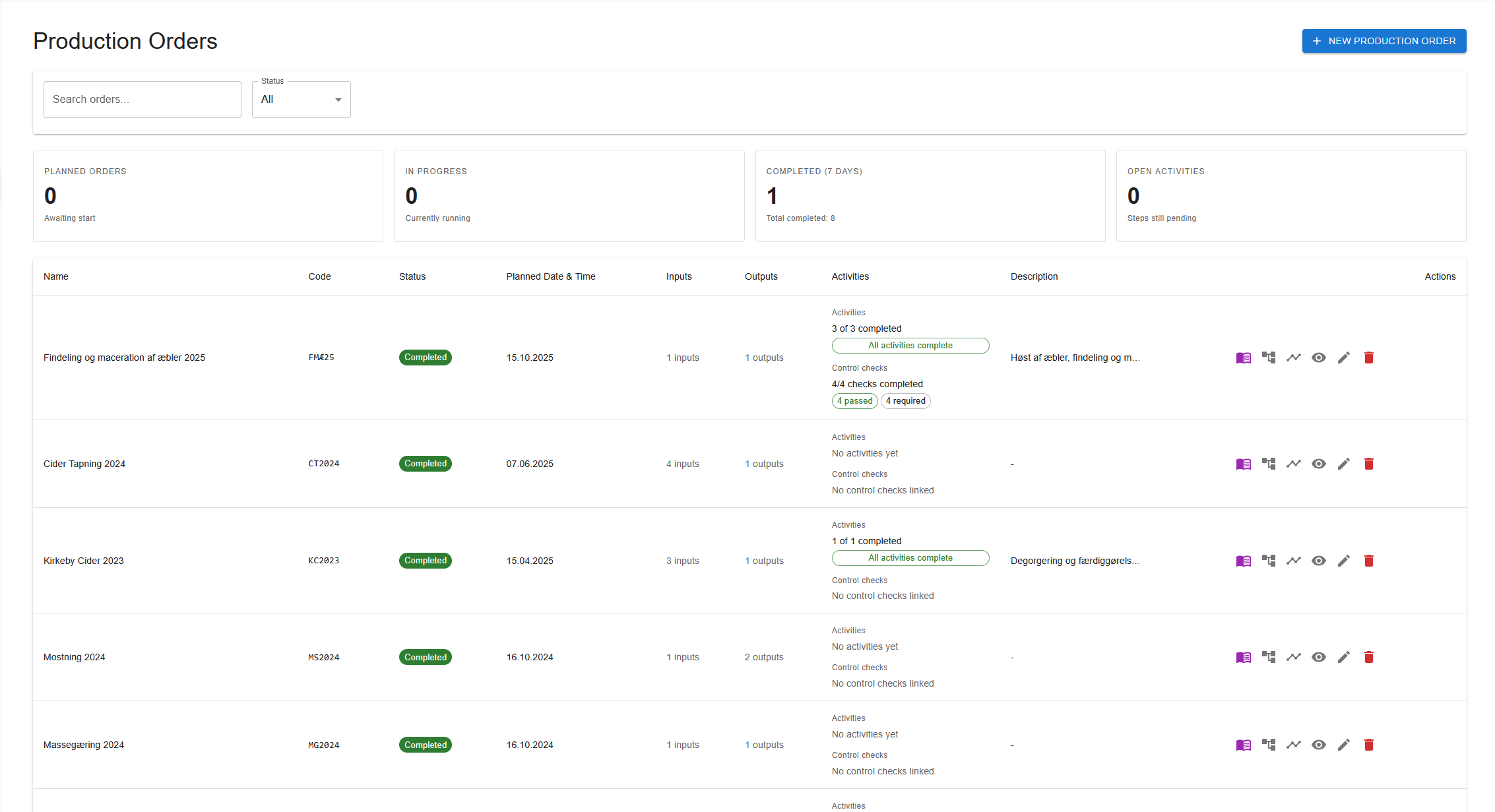
Your workflow in fermt
Your bakery, end to end
Recipes & allergens, handled
Scale recipes up and down with confidence, keep accurate allergen declarations, and manage short shelf-lives without spreadsheets.
Compliance, handled
Allergens & safety, built in
Allergen tracking and HACCP checks built into your recipes and production — ready for inspection.
Fourteen allergens, and no room for a stale answer
Baking sits on top of the most allergen-dense ingredient set in food, and the declaration has to match what is in the product rather than what the recipe used to say. Because digital labels are published per batch and carry allergens, ingredients and a nutrition declaration, a substituted flour or a changed filling produces a label that reflects the change instead of one that quietly does not.
Recipes hold the bill of materials with expected yields, so scaling a batch up or down is a quantity on the order rather than mental arithmetic — and the consumption recorded is what scaling actually implied.
- Allergens and ingredients published per batch, not per product line
- Recipes with expected yields, scaled per production order
- Daily waste recorded as events that adjust stock and feed reporting
- Unit cost from the actual cost of the batches consumed
Waste is a daily number, so it should be a daily record
Unsold bread is a cost, an environmental figure and a planning signal at the same time, and most bakeries only see it as the first. Waste transactions record spoilage and destruction as events that adjust inventory automatically and feed the sustainability reporting, which means the waste ratio is a report rather than an estimate.
The same records answer the cost question. Inventory valuation carries the actual cost of the ingredient batches through production, so unit cost reflects what the run actually consumed rather than a standard cost set once and never revisited.
Questions we get
Bakery questions we get asked
How do we keep allergen declarations accurate?
By publishing them per batch. The label is bound to the batch that was made, so a substitution shows up in the declaration for that batch instead of inheriting a product-line default that is no longer true.
Can we scale a recipe for a bigger run?
Yes. The recipe holds the bill of materials and expected yield, and the production order carries the quantity, so consumption follows the scale rather than being recalculated by hand.
Does fermt track daily waste?
Yes, as waste transactions that adjust inventory automatically and feed the sustainability reporting, so the waste ratio is measured rather than estimated.
Do we get a unit cost per product?
Yes. Costs are captured at goods receipt and carried through production, with stock valued at the actual cost of the batches on hand, so unit cost reflects what was actually consumed.
We supply shops and cafés. Does the delivery side work?
Sales orders allocate batches, delivery notes handle partial shipments with multilingual PDFs, and invoices are raised from the same order with credit notes and payment tracking.
Run your bakery on fermt
Start your free trial today, or talk to us about your setup.